
Natural refrigerant
R290 (propane) has a global warming potential of GWP = 3, compared with about 675 for R32 and about 2088 for R410A. The entire European heat pump market is moving to R290.
An air-to-water heat pump extracts heat from the outdoor air and delivers it to the heating and hot water system. We select, design, install and service Vetero heat pumps running on the natural refrigerant R290. They are made by PHNIX (Guangzhou, China), a manufacturer that builds R290 heat pumps for Europe, and we work with the factory directly.
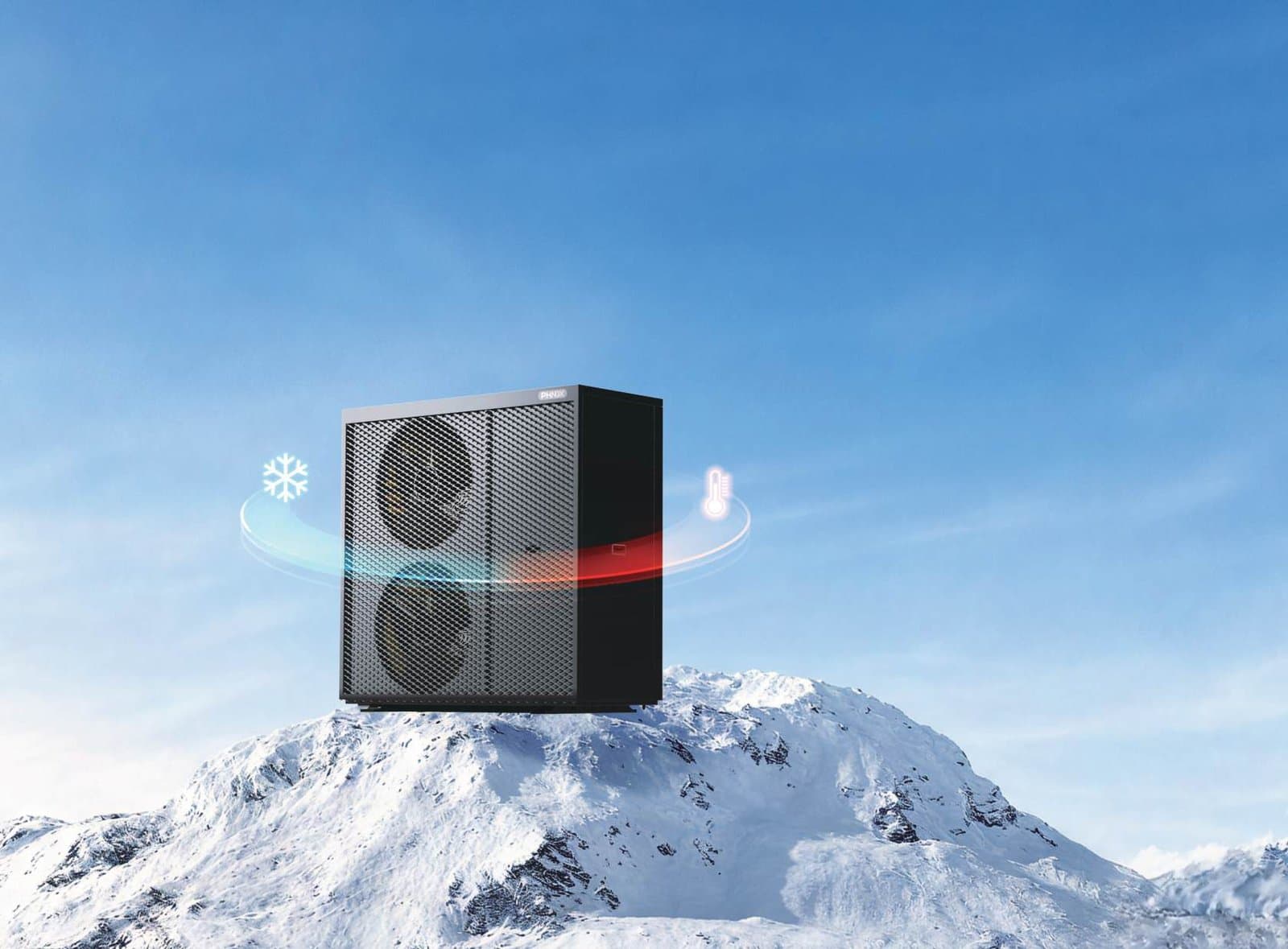
R290 (propane) has a global warming potential of GWP = 3, compared with about 675 for R32 and about 2088 for R410A. The entire European heat pump market is moving to R290.
Enough for conventional radiators. A gas boiler can be replaced without reworking the heating system.
With its EVI compressor, the Vetero AirgreenTherm Pro runs reliably at outdoor temperatures down to −30 °C, which is sufficient for winters in Uzbekistan.
One unit heats the building in winter, cools it in summer and produces hot water all year round.
Seasonal coefficient of performance SCOP up to 5.55: over a season, 1 kWh of electricity yields up to 5.5 kWh of heat.
Combined with a solar power plant and energy storage, the heat pump runs on the site's own electricity.
A heat pump takes 60–80% of its energy from the ambient air and only 20–40% from the grid. How efficiently it runs is shown by its coefficient of performance, COP: how many kilowatts of heat it delivers per kilowatt of electricity. COP depends on the weather and on the temperature the water is heated to.
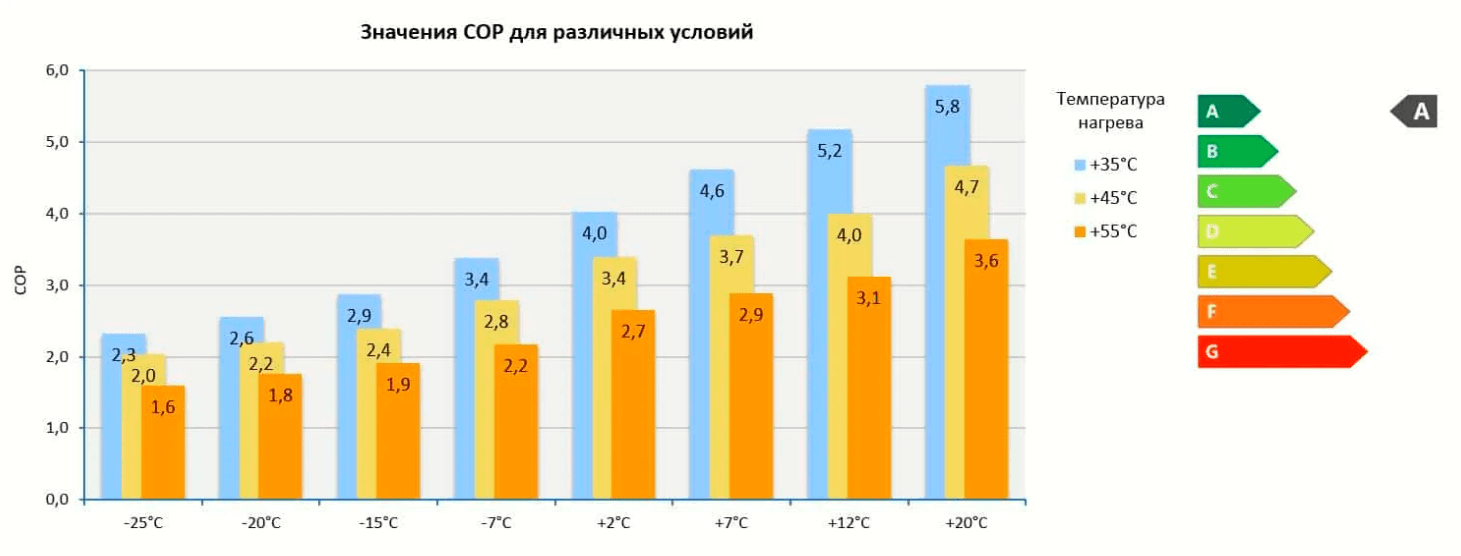
This leads to two practical rules. Underfloor heating and low-temperature radiators save noticeably more than high-temperature radiators. And offers should be compared by the seasonal coefficient SCOP over the whole heating season, not by the rated COP under the best conditions. We calculate SCOP using an hourly climate model for Tashkent.
A rule of thumb from engineering practice: lowering the flow temperature by 1 °C raises COP by about 2.5%, and raising the source temperature by 1 °C raises it by about 2.7%. Tashkent's design winter temperature is −14 °C and the heating season lasts about 129 days, so seasonal efficiency here is higher than in northern countries.
| Source | Features |
|---|---|
| Outdoor air | Available everywhere, with the lowest installation cost. In severe frost there is less heat available, so the capacity is selected with a margin or a peak-load boiler is added. |
| Ground | 7–13 °C all year round at a depth of 3 m. Boreholes 100–150 m deep for high capacities, a horizontal collector at 1.5–2 m for smaller ones. More expensive to install. |
| Groundwater | 7–12 °C all year round, with almost no temperature variation. Requires two wells and a hydrogeological survey. |
| Wastewater and waste heat | A good source for industrial facilities and large buildings; requires a corrosion-resistant intermediate heat exchanger. |
For most homes and commercial buildings in Uzbekistan, outdoor air is the optimal source. Ground and water give a higher COP but require drilling and surveys, and we calculate whether this pays off for the specific site.
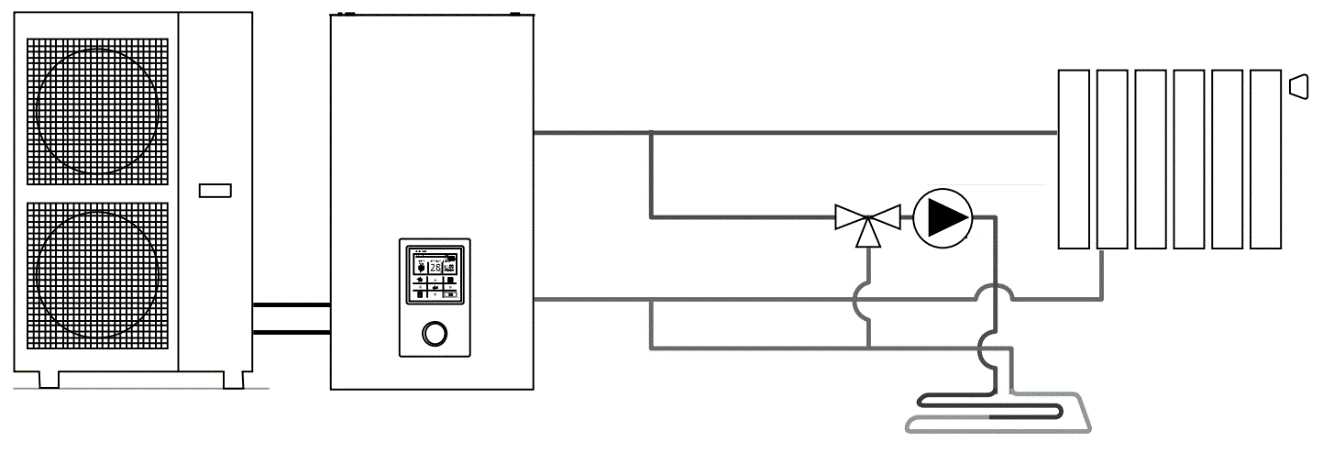
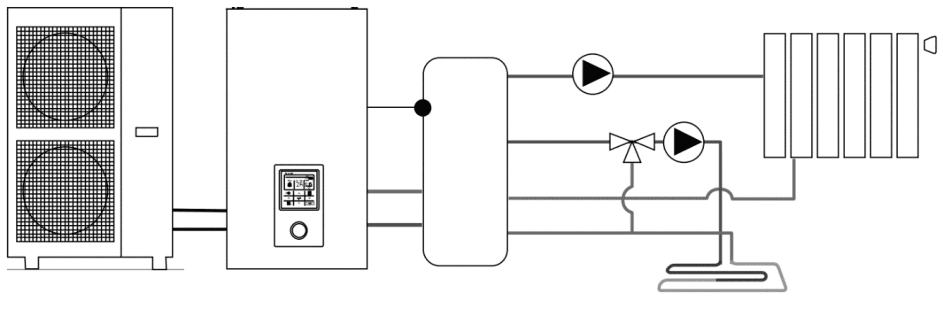
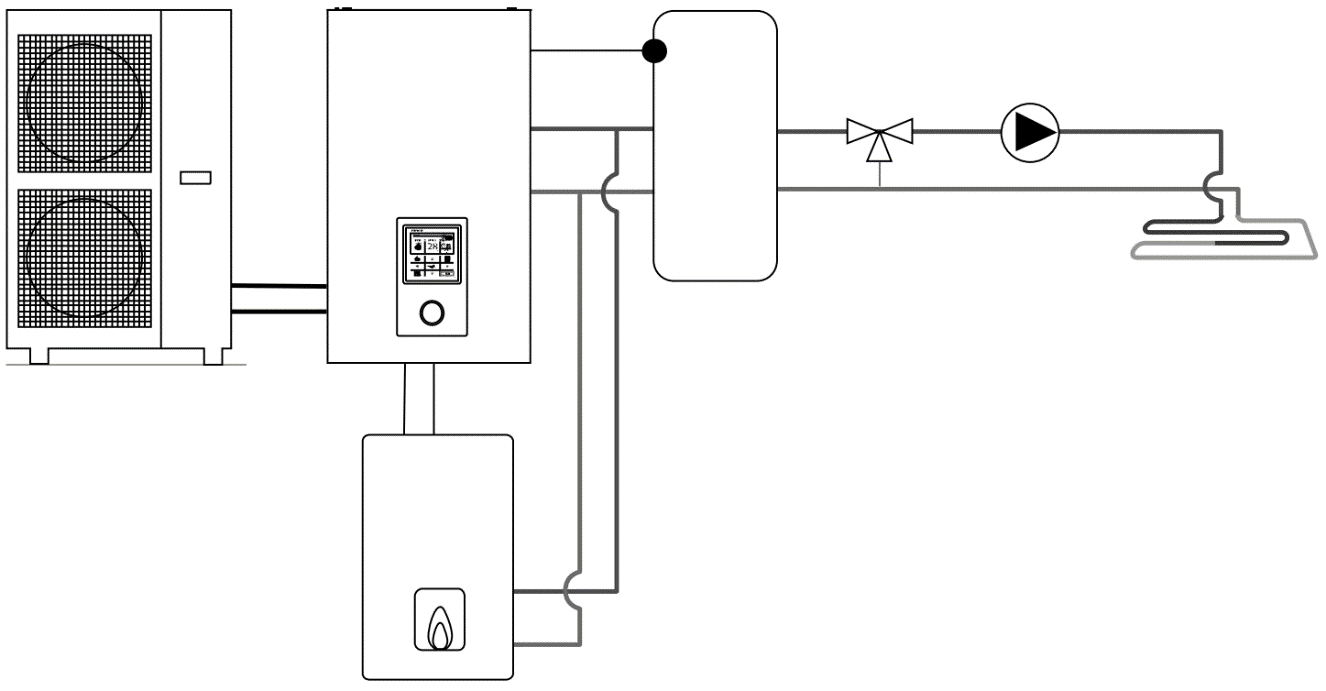
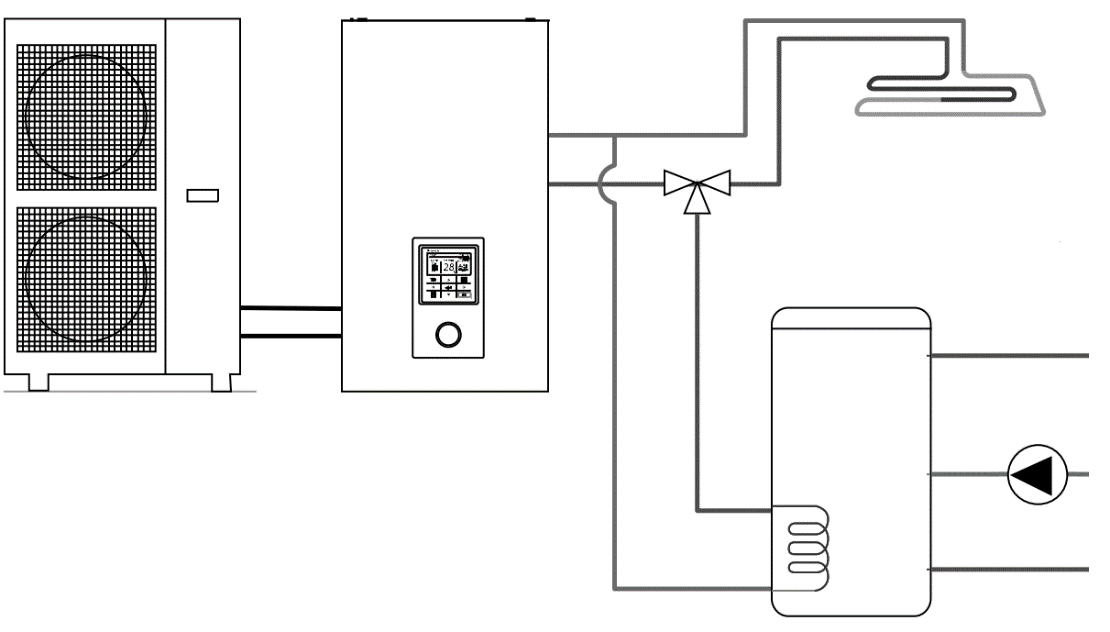
Diagrams from the textbook “Heat Pumps” (Tashkent, 2026), which we use in our training for engineers.
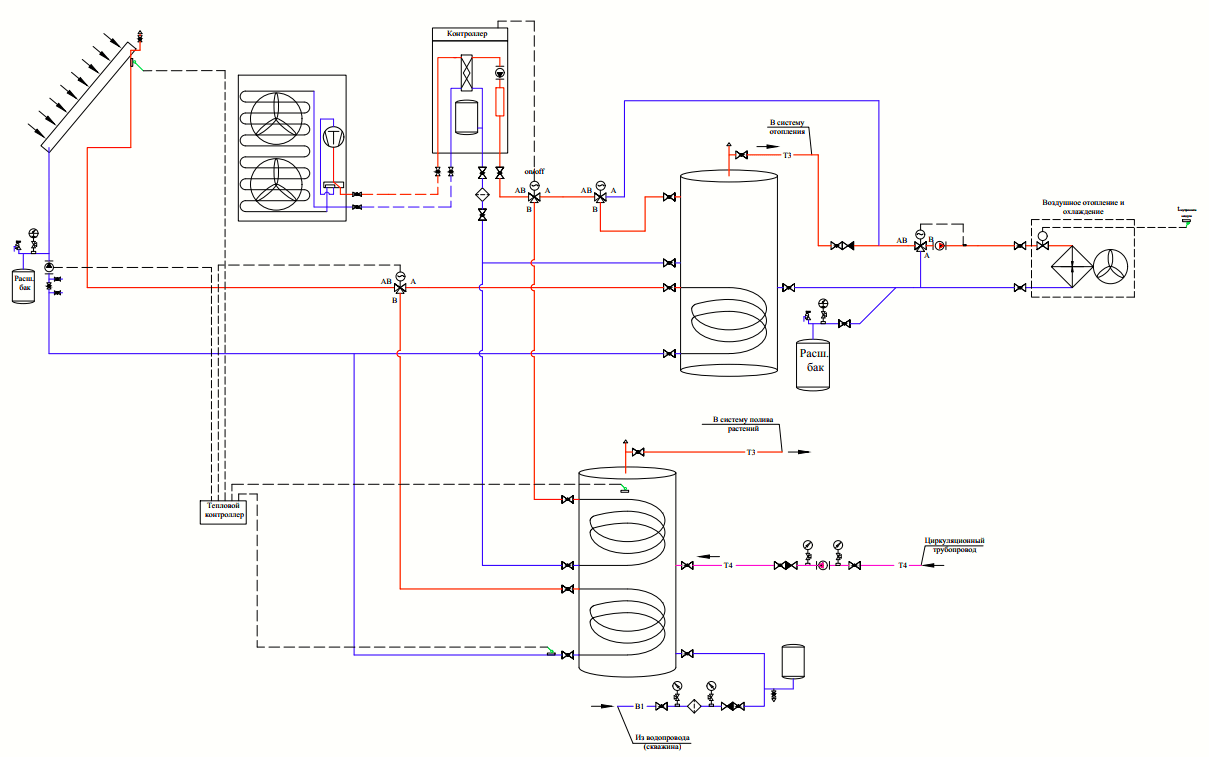
For general education School No. 19, a system was designed in which a cascade of air-source heat pumps works together with solar collectors, a buffer tank and a hot water tank. The same installation provides air heating and cooling, and the power supply is supplemented by solar panels, a hybrid inverter, 15.4 kWh batteries and a backup generator. A heat meter and electricity metering show the actual savings.
Winters here are cold and summers are hot, so buildings need both heating and cooling. An R290 heat pump handles both with a single unit, reduces dependence on gas during the heating season and works well with solar generation. It also cuts CO₂ emissions, which matters for companies that track their carbon footprint.
A heat pump for homes and small commercial buildings: heating, cooling and hot water. EVI compressor, water up to 80 °C, operation down to −30 °C, A+++ energy efficiency class at 35 and 55 °C, smartphone control.
Heating capacity 6 kW, up to 10.7 kW
Power supply 220 V, R290 refrigerantHeating capacity 12 kW, up to 17.7 kW
Power supply 220 or 380 V, R290 refrigerantHeating capacity 17 kW, up to 24.6 kW
Power supply 220 or 380 V, R290 refrigerant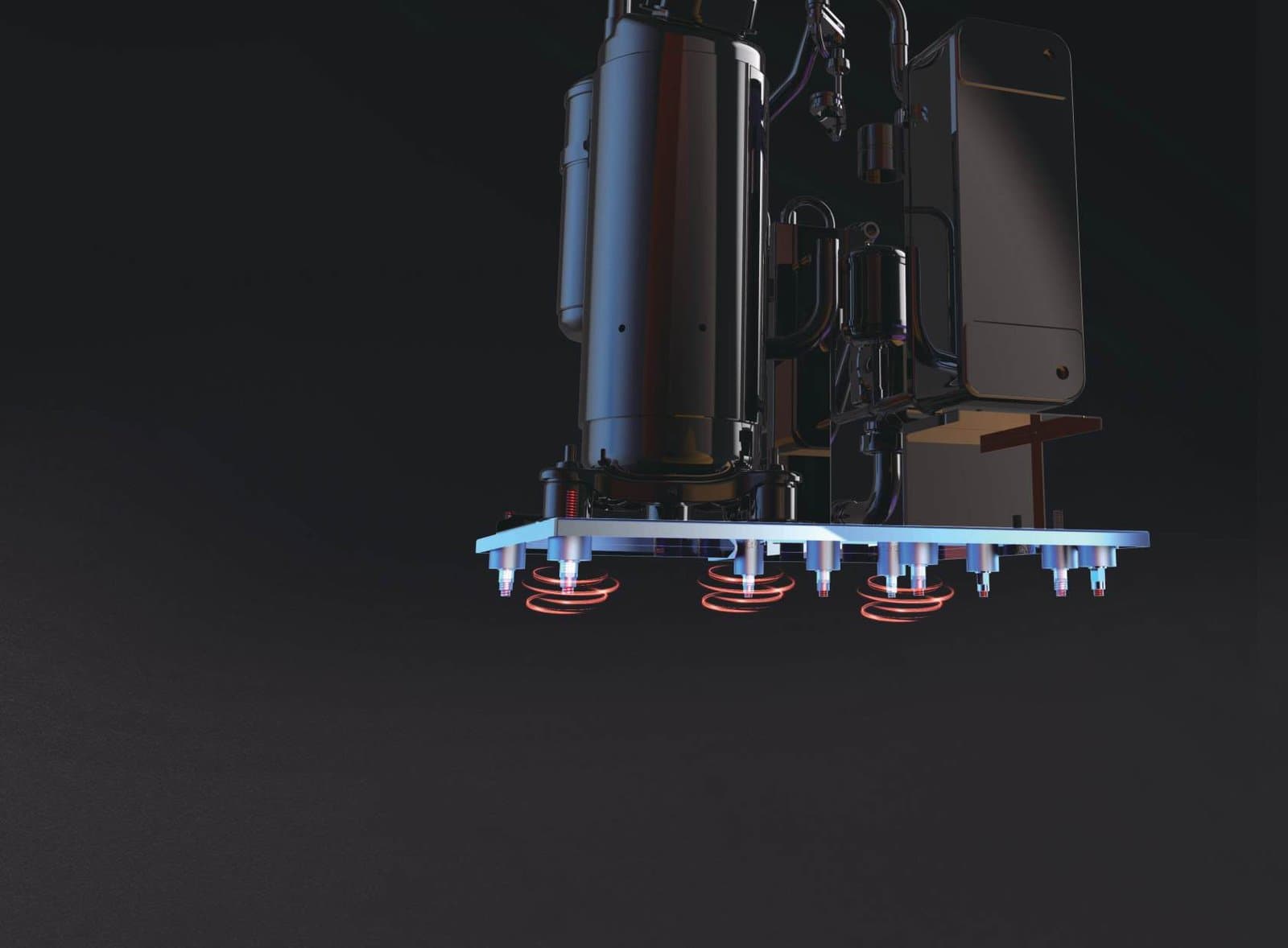

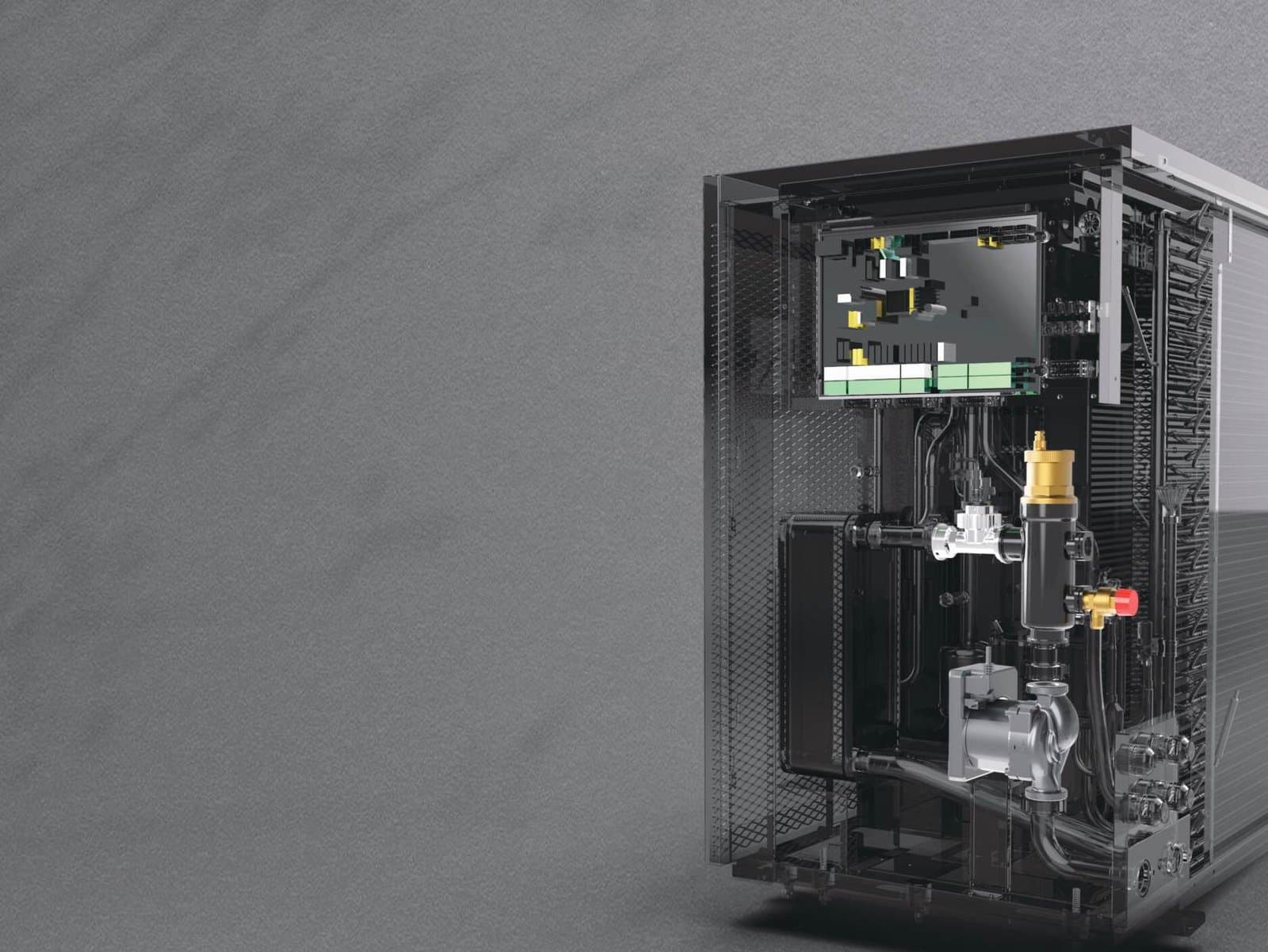
Heat pump water heater
COP up to 3.41 (EN 16147)Heating, cooling and domestic hot water for hotels, hospitals, shopping centers and production facilities
up to 75 °C without electric heaters, −25 to 43 °C, cascade of up to 16 modulesPool water heating
inverterSpecifications are as stated by the manufacturer. Output depends on air and water temperatures; exact parameters are confirmed during selection. Full data tables, the tank hydromodule and the Vetero PDF catalog are collected in the equipment catalog.
R290 is a flammable refrigerant, so equipment that uses it is designed differently. The heat pump is a monobloc unit installed outside the building; the refrigerant circuit is charged and sealed at the factory, and only water goes into the house. The units have built-in leak sensors. Installation is carried out by our specialists in line with the manufacturer's requirements.
Fill in the contact formFill in the contact form