
On-grid plant
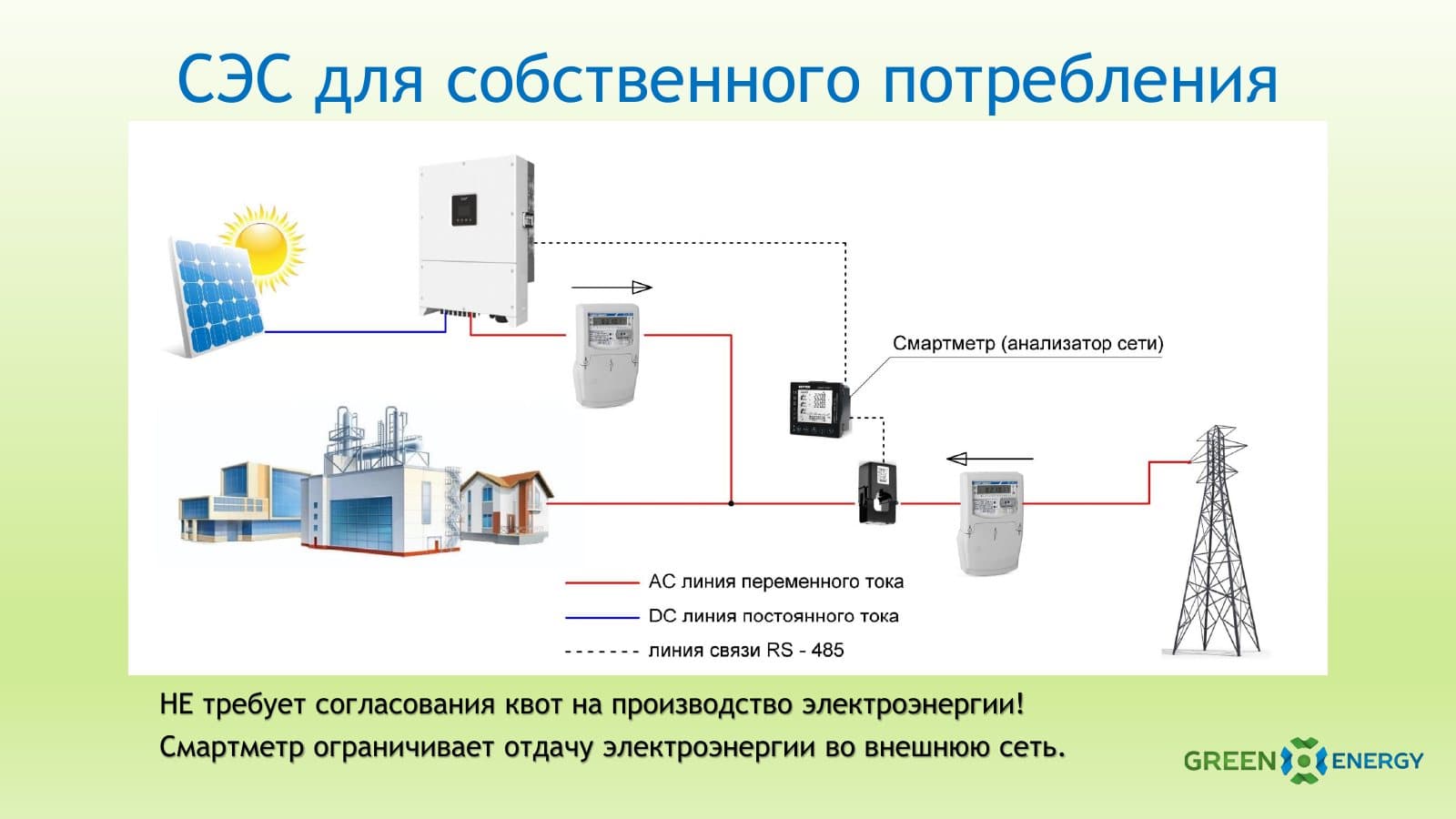
No batteries. Power goes straight to the site's consumers and reduces what you buy from the grid. The fastest payback option for factories, shopping centres and warehouses.
Uzbekistan gets considerably more sun than Europe, and electricity has become more expensive since 2026. An on-site solar power plant cuts the energy you buy from the grid, while a battery energy storage system (BESS) provides backup during outages and lets you use daytime generation in the evening.
No batteries. Power goes straight to the site's consumers and reduces what you buy from the grid. The fastest payback option for factories, shopping centres and warehouses.
A hybrid inverter plus batteries. Provides backup power during outages and stores daytime generation for the evening. Suits homes, offices and production sites with critical loads.
For sites with no grid connection: remote locations, pumping stations, farms, site cabins. Batteries are a must, and the capacity is sized for the worst days.
A simple rule: if there is a grid and you need no backup, choose an on-grid plant. If you need backup, go hybrid. If there is no grid, go off-grid. Surplus power can be sold to the grid under a contract with the utility; we check the terms for each specific site.
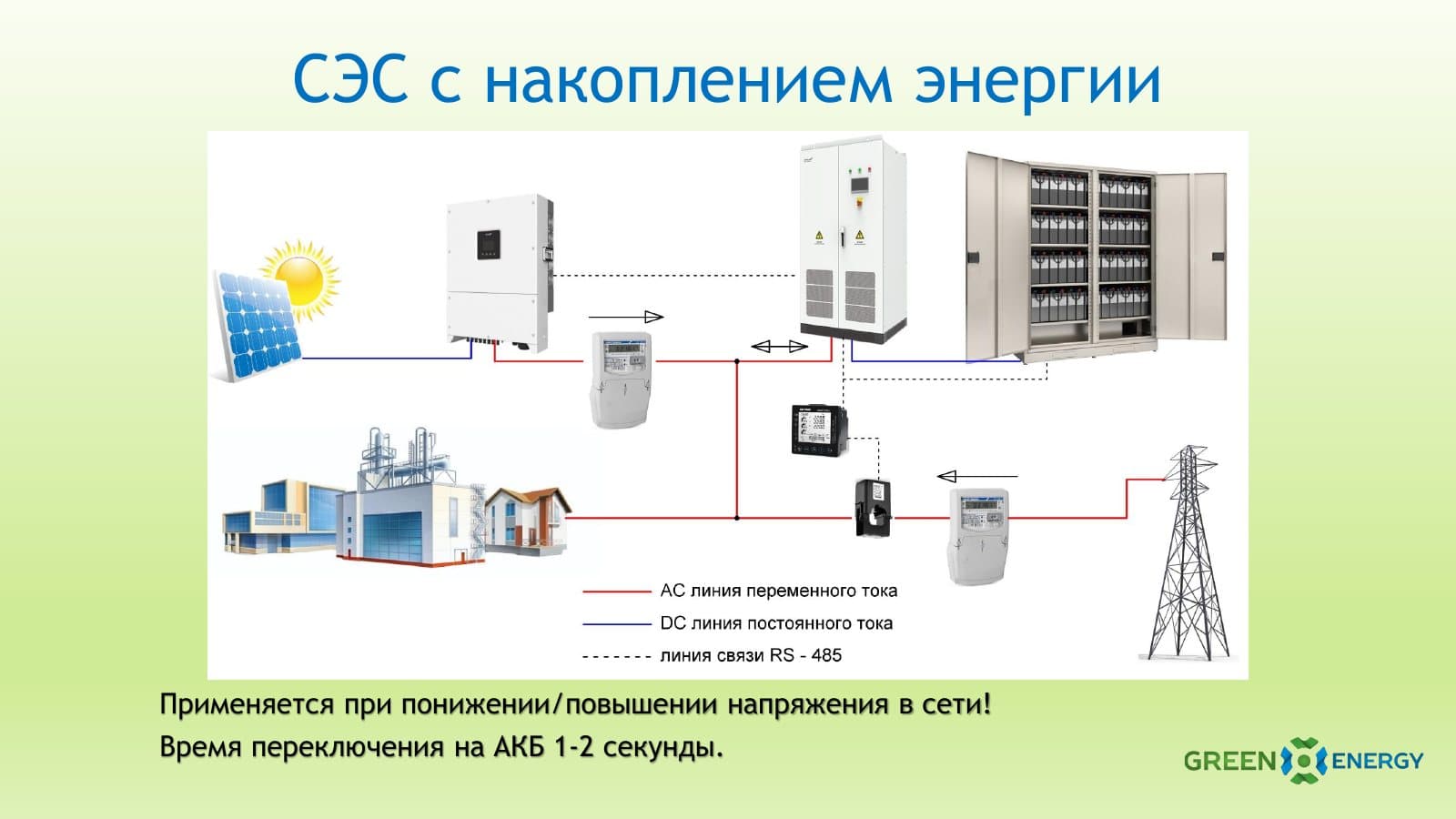
When the grid goes down, the load switches to the batteries: within 1–2 seconds in an on-grid layout and with no interruption in a layout with an online UPS. Servers, refrigerators and boilers keep running.
Surplus daytime solar generation charges the batteries and is used in the evening and at night instead of going to the grid.
The batteries cover short power peaks such as machine tools, compressors and pumps starting up. You may not need to increase your connected capacity.
The inverter smooths out voltage dips and fluctuations, so equipment runs within its normal operating range.
Monocrystalline and bifacial modules rated 430–630 W with 22–23% efficiency. They retain at least 80% of their output after 25 years.
On-grid, hybrid and off-grid, with MPPT controllers. Three-phase units with remote monitoring for businesses.
Lithium iron phosphate (LiFePO4): 4,000–6,000 cycles at 80% depth of discharge. Lithium titanate (LTO) batteries work even at −30 °C.
Ready-made storage systems from 60 to 215 kWh in a single cabinet, expandable with modules.
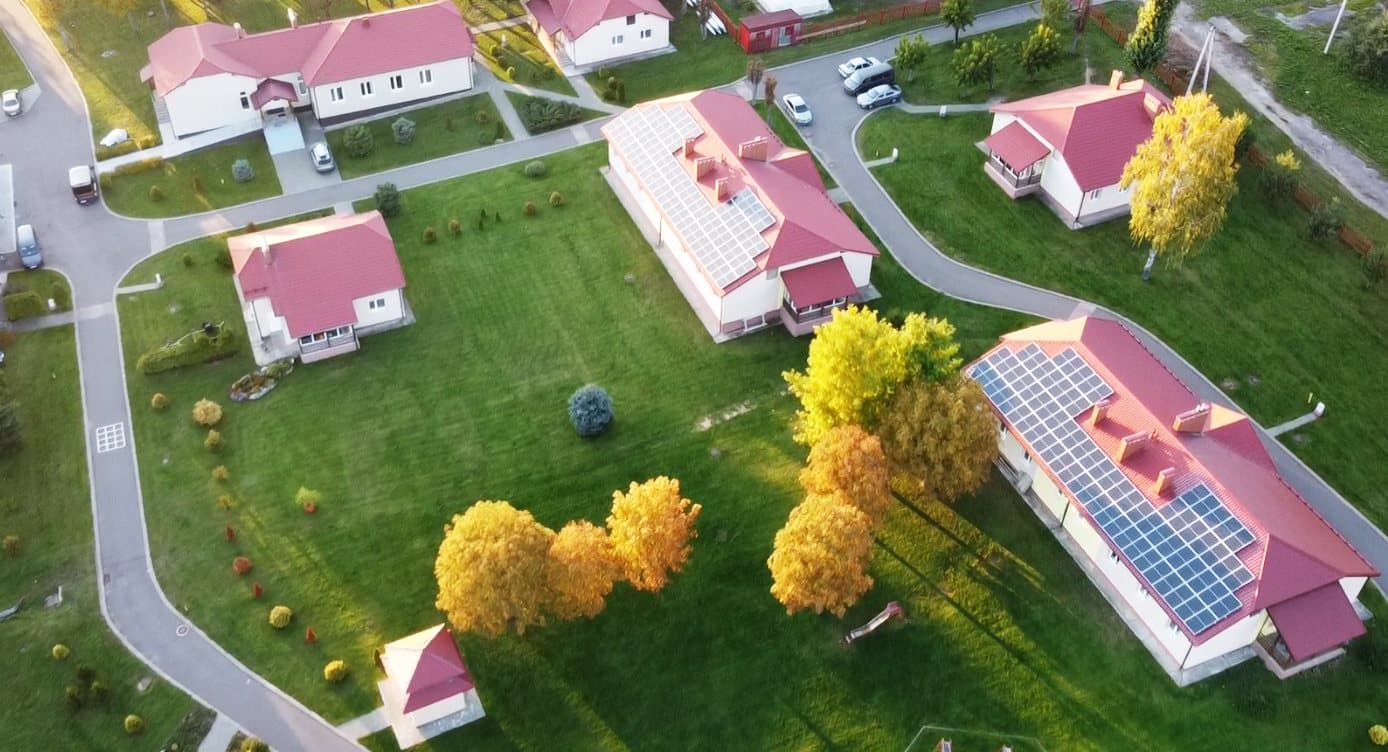
Since 2020 our group companies have built solar plants in Belarus with a total capacity of about 370 kW, from a hybrid system for a private house to 209 kW on a factory roof.
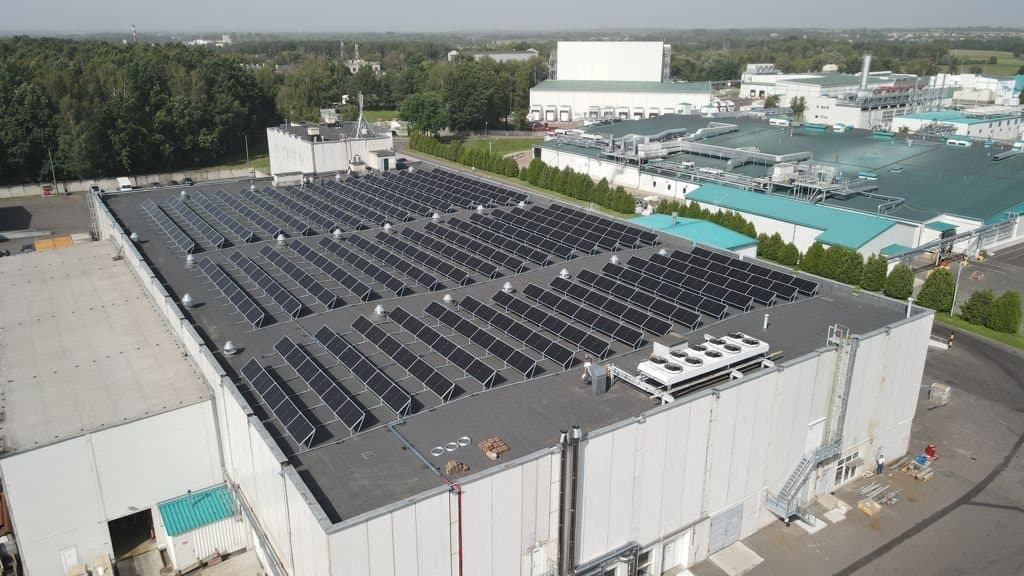
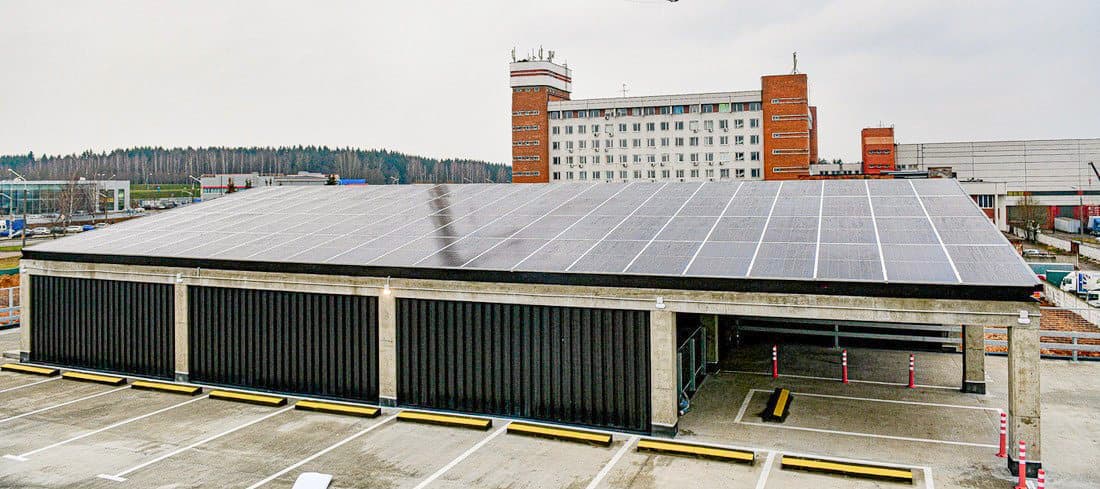
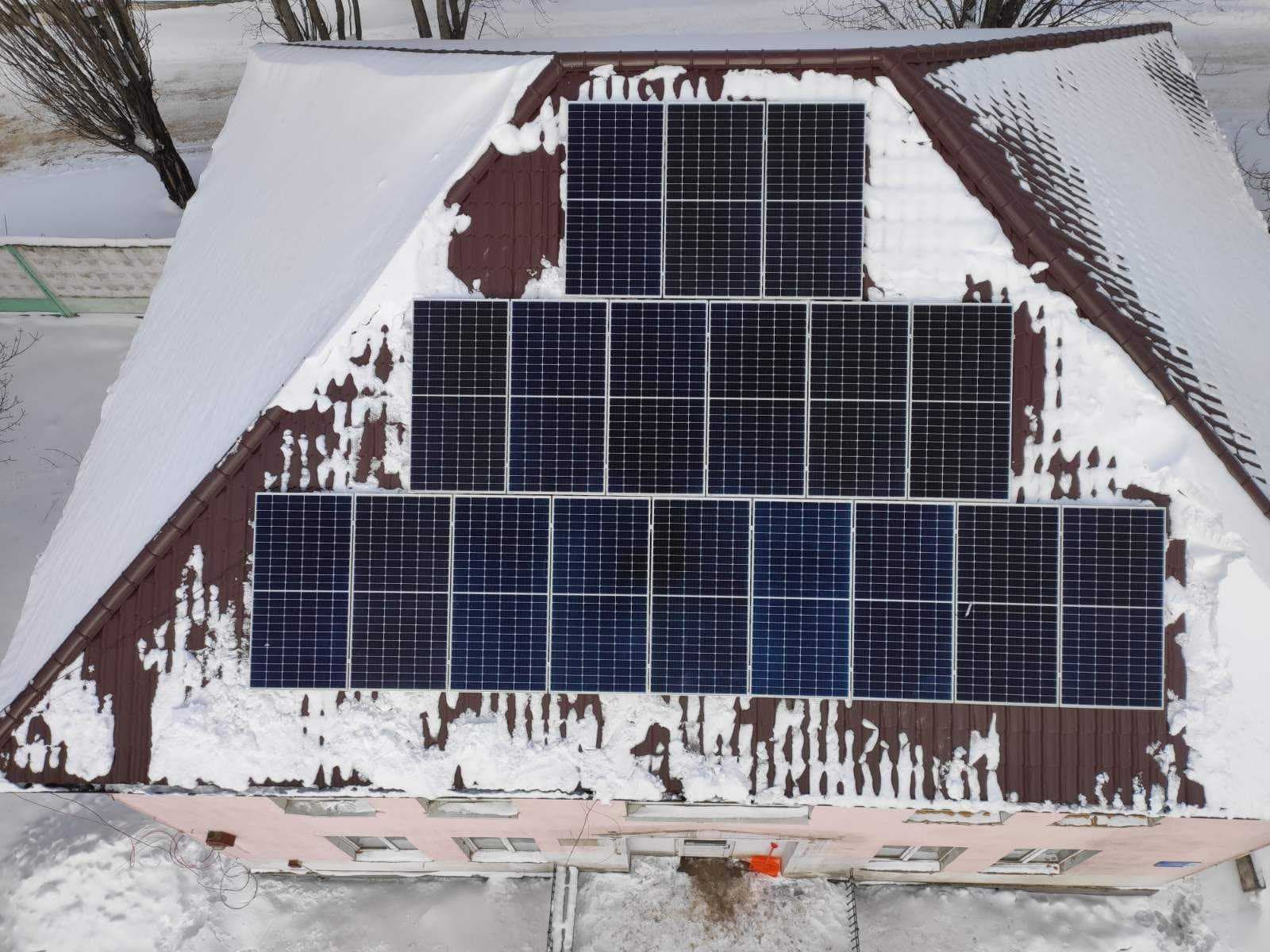
A 100 kW on-grid plant on a factory roof. With an estimated yield of 1,500 kWh per kW per year, it produces about 150,000 kWh. If all of it is consumed on site, that is about 147,321,000 UZS a year at a tariff of 982.14 UZS/kWh excluding VAT.
The yield is an indicative figure. For your site we model it hour by hour, taking into account orientation, tilt, shading and your load profile, together with the payback period and the reduction in Scope 2 emissions.
On-site renewable generation reduces Scope 2 emissions and is part of corporate energy-saving and decarbonization programmes. For exporters it is also a way to lower the carbon footprint of their products. Learn more in ESG and decarbonization.
Fill in the contact formFill in the contact form